
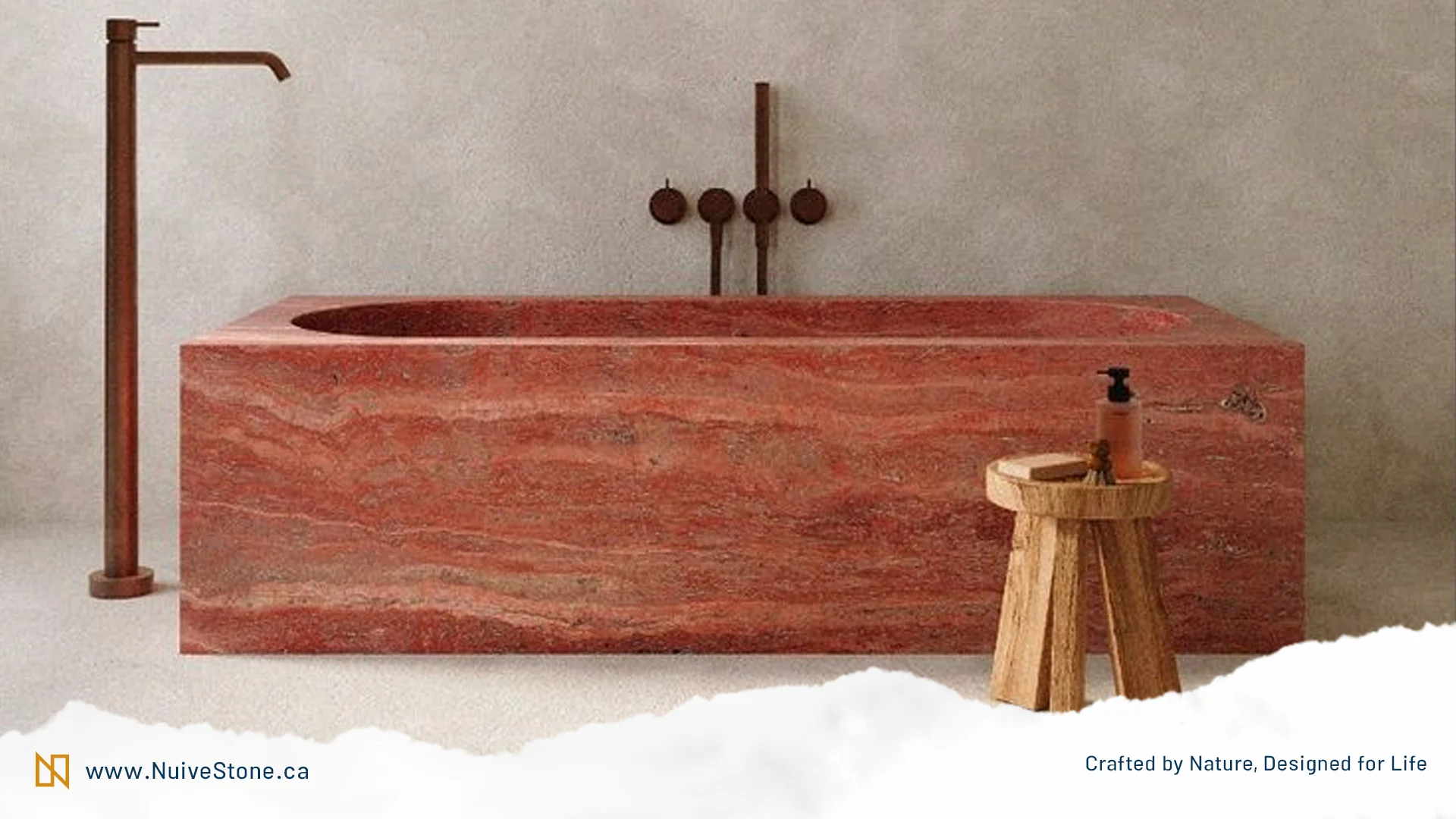
Few materials in the world of design and construction can rival the timeless elegance and enduring practicality of travertine stone. From the awe-inspiring amphitheaters of ancient Rome to today’s chic patios, kitchens, and walkways, this natural stone has captured the hearts of architects and homeowners alike for centuries. With its warm, earthy tones and distinctive texture, travertine offers a unique blend of natural beauty and exceptional durability, making it a versatile choice for both indoor and outdoor projects.
At Nuivestone, we believe every stone has a story, and travertine is no exception. In this guide, we’ll delve into everything you need to know about this remarkable material — from its geological origins to its modern-day applications. Whether you’re designing a luxurious bathroom, crafting a stunning backyard oasis, or seeking a flooring solution that can withstand the test of time, travertine stone could be your perfect match. Let’s explore its unmatched charm and discover why it continues to be a top choice in design and architecture.
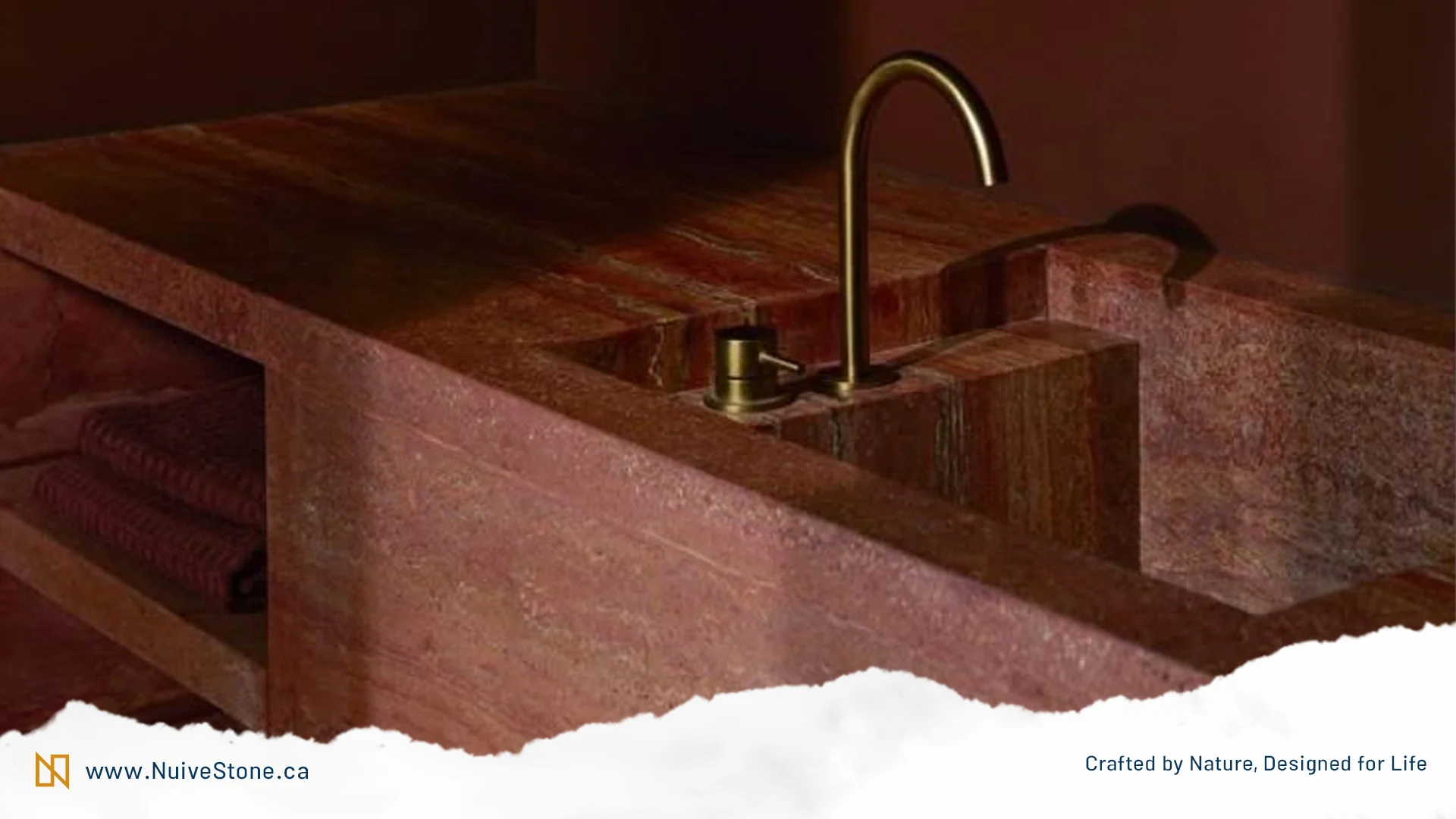
What Is Travertine Stone?
What Is Travertine?
Travertine is a captivating natural stone formed over thousands of years through the slow accumulation of minerals in environments like hot springs, rivers, and limestone caves. This ancient process, driven by the interaction of mineral-rich groundwater and carbon dioxide, creates a stone that is both durable and visually stunning. Its long-standing popularity in architecture and design is a testament to its timeless appeal, with examples ranging from the grandeur of Roman amphitheaters to today’s modern spaces.
The formation of travertine is a fascinating geological process. Groundwater rich in dissolved calcium ions (Ca²⁺) and carbon dioxide (CO₂) emerges to the surface, where the sudden release of CO₂ causes calcium carbonate (CaCO₃) to precipitate and solidify. Over time, this results in the creation of travertine’s signature porous layers. The tiny gas bubbles trapped during this process leave behind a pitted texture that is distinctive to travertine. This natural texture can either be left unaltered for a rustic look or filled for a polished and smooth finish, offering versatility in its application.
Beyond its unique texture, travertine’s color palette adds to its allure. Influenced by the minerals present in its environment during formation, its hues range from soft ivory and golden beige to rich walnut and silver gray. Each piece is a one-of-a-kind creation of nature, making travertine a material that exudes character and individuality.
This combination of beauty, durability, and versatility explains why travertine remains a favorite for both homeowners and designers. Whether you’re seeking to add warmth to your interiors or elegance to your outdoor spaces, travertine delivers an unparalleled blend of natural charm and practical functionality.
Travertine’s Unique Features
Travertine stands out among natural stones for its distinct combination of beauty, durability, and practicality. Whether you’re designing an elegant interior or crafting a welcoming outdoor space, travertine’s unique features make it a top choice for homeowners and designers alike. Its versatility and natural charm ensure it holds its place as a timeless material in architecture and design.
Hardness and Durability
Travertine strikes the perfect balance between strength and workability. Harder than many stones like marble, it offers excellent resistance to wear and tear, making it ideal for high-traffic areas such as hallways, kitchens, and patios. When properly sealed, it becomes even more durable, withstanding daily use while maintaining its beauty. While it is tough enough for most applications, travertine can still be prone to chipping or scratching if exposed to heavy impacts, so careful handling is essential in certain installations.
Texture and Appearance
One of the most defining features of travertine is its signature porous texture, created by natural gas bubbles during its formation. This gives it a rustic and earthy appeal, perfect for outdoor spaces or homes with a classic aesthetic. For those preferring a more refined look, honing or polishing techniques can smooth the surface while retaining the stone’s unique character. Additionally, travertine’s warm, neutral tones—ranging from soft cream and beige to richer walnut hues—provide a versatile backdrop that complements a wide variety of design styles.
Eco-Friendly and Sustainable
As a naturally occurring stone, travertine is an eco-friendly option compared to synthetic alternatives. It requires minimal processing, which reduces its environmental impact. Choosing travertine supports sustainable practices while giving your space a natural, organic feel. Its timeless beauty ensures longevity, reducing the need for replacement over time and further adding to its sustainability.
Porosity and Maintenance
Travertine’s porosity is both a characteristic and a consideration. Its ability to absorb liquids means it requires proper sealing to prevent stains and moisture damage, especially in areas like bathrooms or outdoor spaces exposed to the elements. With the right care and maintenance, sealed travertine remains a durable and beautiful addition to any space for years to come.
From its durable nature to its eco-friendly appeal, travertine offers a unique blend of aesthetics and practicality that few materials can match. Its distinct features not only elevate your designs but also provide a lasting investment in style and functionality.
Types and Variations of Travertine
Travertine offers a stunning array of types, colors, and finishes, making it a highly versatile material for a wide range of projects. Whether you’re designing a modern kitchen, a rustic outdoor patio, or a luxurious bathroom, understanding the various options available will help you select the perfect type of travertine to suit your style and needs.
Color Variations
Travertine’s natural beauty is enhanced by its diverse color palette, shaped by the minerals present during its formation. The most common hues include light cream, ivory, and tan, but travertine can also be found in striking shades of white, red, yellow, and deep brown. The stone’s swirling patterns and veins, often created by iron and other minerals, add depth and character to each piece, making every slab or tile unique. These natural variations make travertine a go-to choice for anyone looking to incorporate both beauty and individuality into their space.
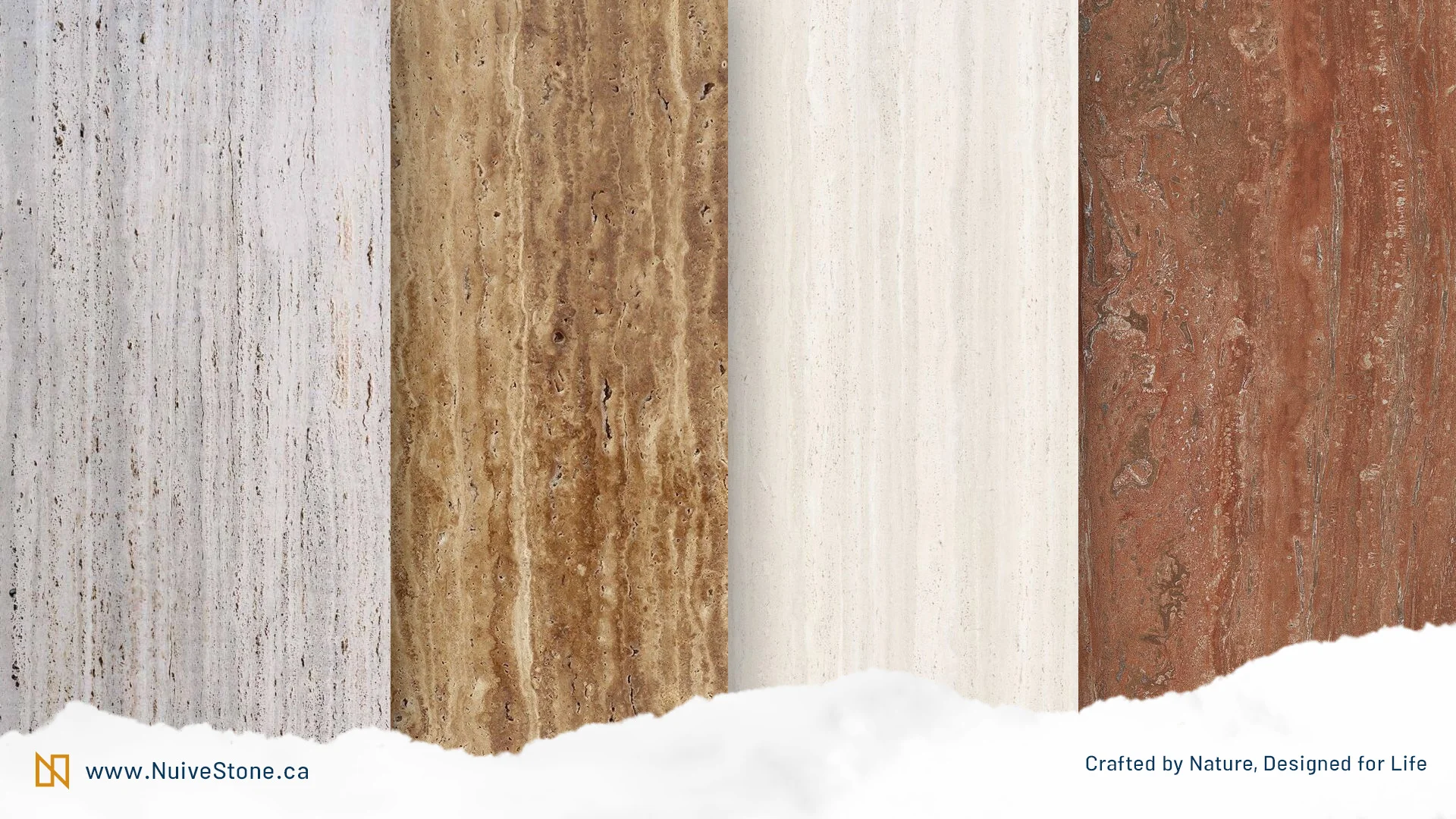
Travertine’s Color Variations
Popular Types of Travertine
Travertine comes in several distinctive types, each with its own aesthetic appeal and ideal applications:
- Silver Travertine: This light gray or silver-toned stone offers a sleek, contemporary look, making it a favorite for high-traffic areas like floors, walls, and countertops.
- Travertine Giallo: Known for its warm yellow hue and intricate patterns, this variation is perfect for creating inviting interiors and elegant flooring.
- Ivory Travertine: With its crisp, clean white tones, ivory travertine brings a classic and timeless feel to both traditional and modern designs.
- Walnut Travertine: A rich, dark brown variety, walnut travertine adds warmth and sophistication, ideal for floors, walls, and countertops where depth and richness are desired.
Types of Finishes
Travertine’s finishes play a significant role in its overall appearance and functionality. Here are the most popular finishes to consider:
- Honed Finish: Featuring a smooth, matte surface, honed travertine is a versatile choice for floors, backsplashes, and countertops, offering understated elegance that suits any design style.
- Polished Finish: Polished travertine undergoes sanding and buffing to achieve a glossy, reflective surface, making it ideal for countertops and spaces where a more luxurious feel is desired.
- Tumbled Finish: For a rustic or vintage look, tumbled travertine is the perfect option. Its distressed surface adds character and is often used in country-style homes or outdoor patios.
- Brushed Finish: Created using a wire brush, this textured finish not only enhances the stone’s natural look but also provides a slip-resistant surface, making it excellent for wet areas like pool decks.
By combining the right type, color, and finish of travertine, you can create a personalized and timeless look for your home or landscape, ensuring both beauty and functionality for years to come.
Applications and Uses
Travertine’s versatility and timeless appeal make it a popular choice for a wide range of applications, both indoors and outdoors. Its natural beauty, durability, and adaptability ensure that it enhances any space, whether you’re seeking a sleek modern look or a warm, rustic ambiance. Here’s how travertine can be incorporated into your home or landscaping projects.
Interior Applications
Travertine is an excellent choice for interior spaces, bringing elegance and functionality to any room. Its durability makes it ideal for flooring, where it adds a touch of sophistication to living rooms, kitchens, and bathrooms. Polished or honed travertine provides a luxurious feel underfoot, while its neutral tones blend seamlessly with various decor styles. Countertops made of travertine are another popular application, offering a luxurious and practical surface when properly sealed to protect against stains and scratches.
For a more decorative touch, backsplashes and accent walls featuring travertine bring texture and warmth to kitchens or living spaces. Travertine’s heat resistance makes it a preferred material for fireplaces, where it combines functionality with a stunning visual appeal. Bathrooms are another area where travertine shines, lending a spa-like atmosphere to showers, vanity tops, and flooring with its naturally soothing tones.
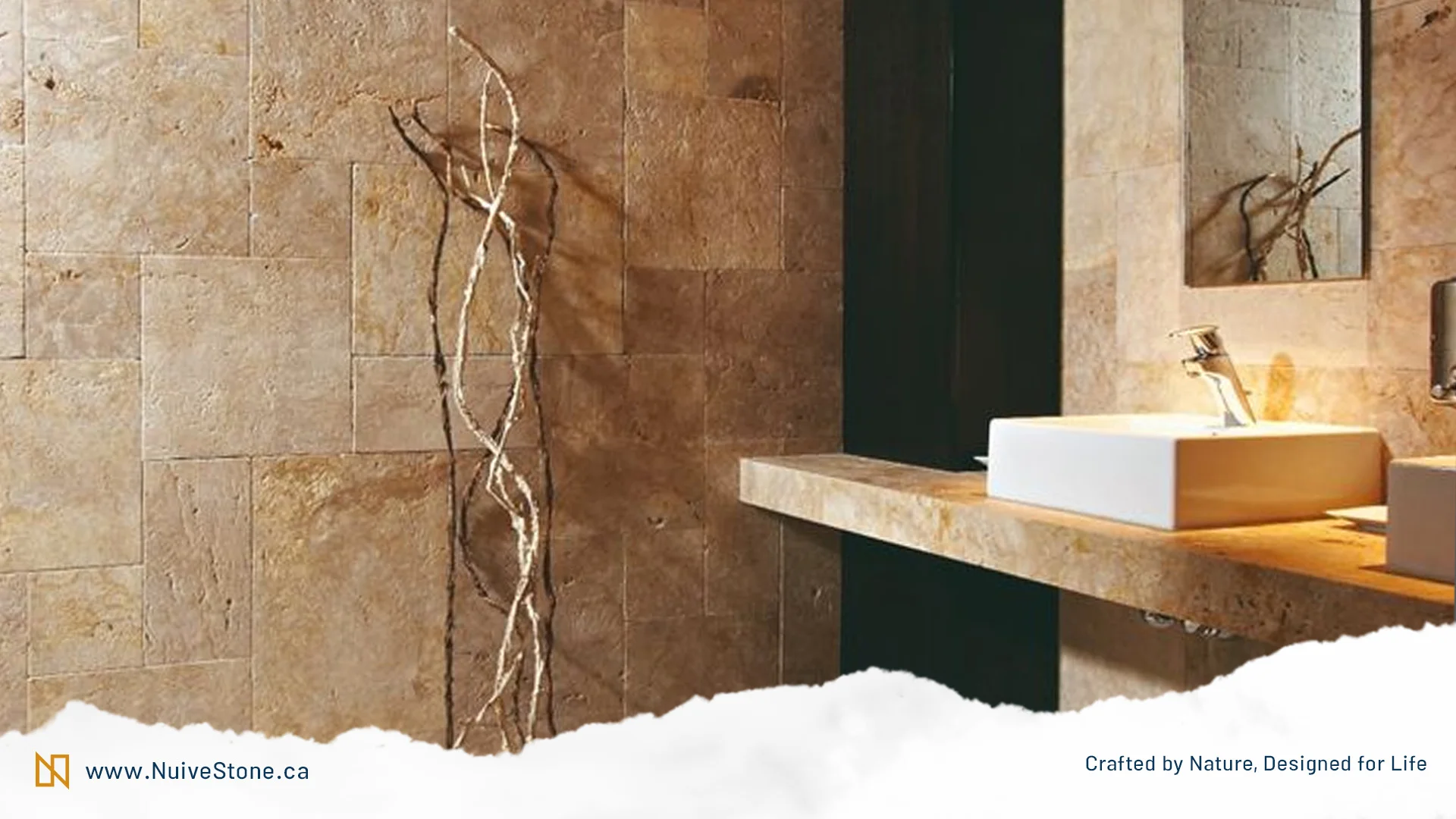
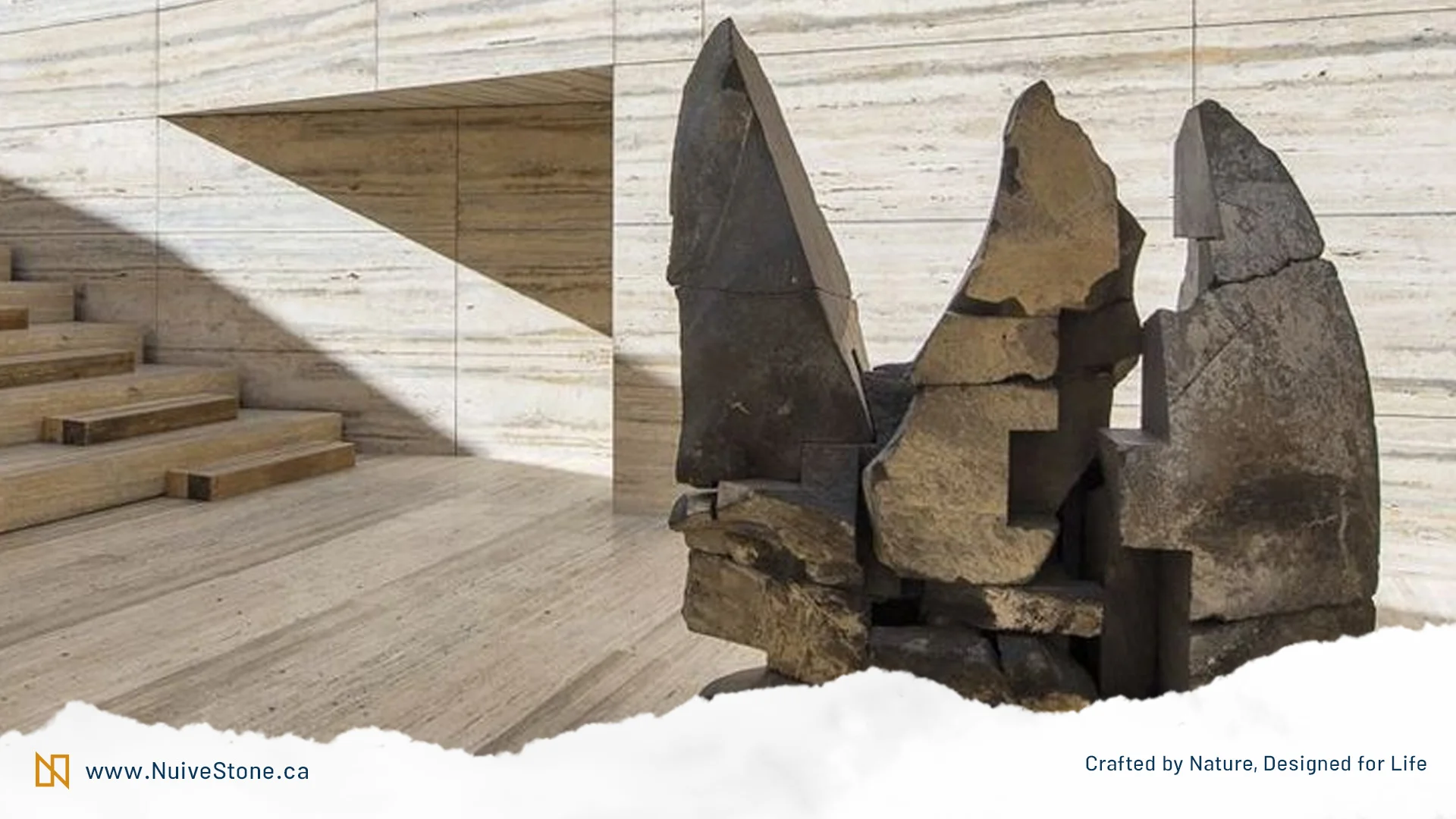
Travertine in interior spaces
Exterior Applications
Outdoors, travertine’s durability and natural charm make it a top choice for enhancing curb appeal and creating inviting landscapes. Tumbled travertine pavers are a favorite for patios and pathways, providing a rustic yet elegant appearance that’s slip-resistant and weather-friendly. Pool coping crafted from brushed or honed travertine adds safety and sophistication, while the stone’s natural texture ensures a secure footing.
For more structural uses, travertine is often used in driveways, where its strength and aesthetic appeal complement the home’s exterior while handling the weight of vehicles. Garden features, such as walls, stepping stones, or decorative edging, bring an air of refinement to outdoor spaces. Additionally, travertine is a sturdy and stylish choice for outdoor stairs, ensuring long-lasting functionality while maintaining an elegant look.
From functional surfaces to decorative enhancements, travertine is a versatile and enduring material that elevates both interiors and exteriors. Its ability to combine practicality with natural beauty ensures that it remains a favorite in design and architecture.
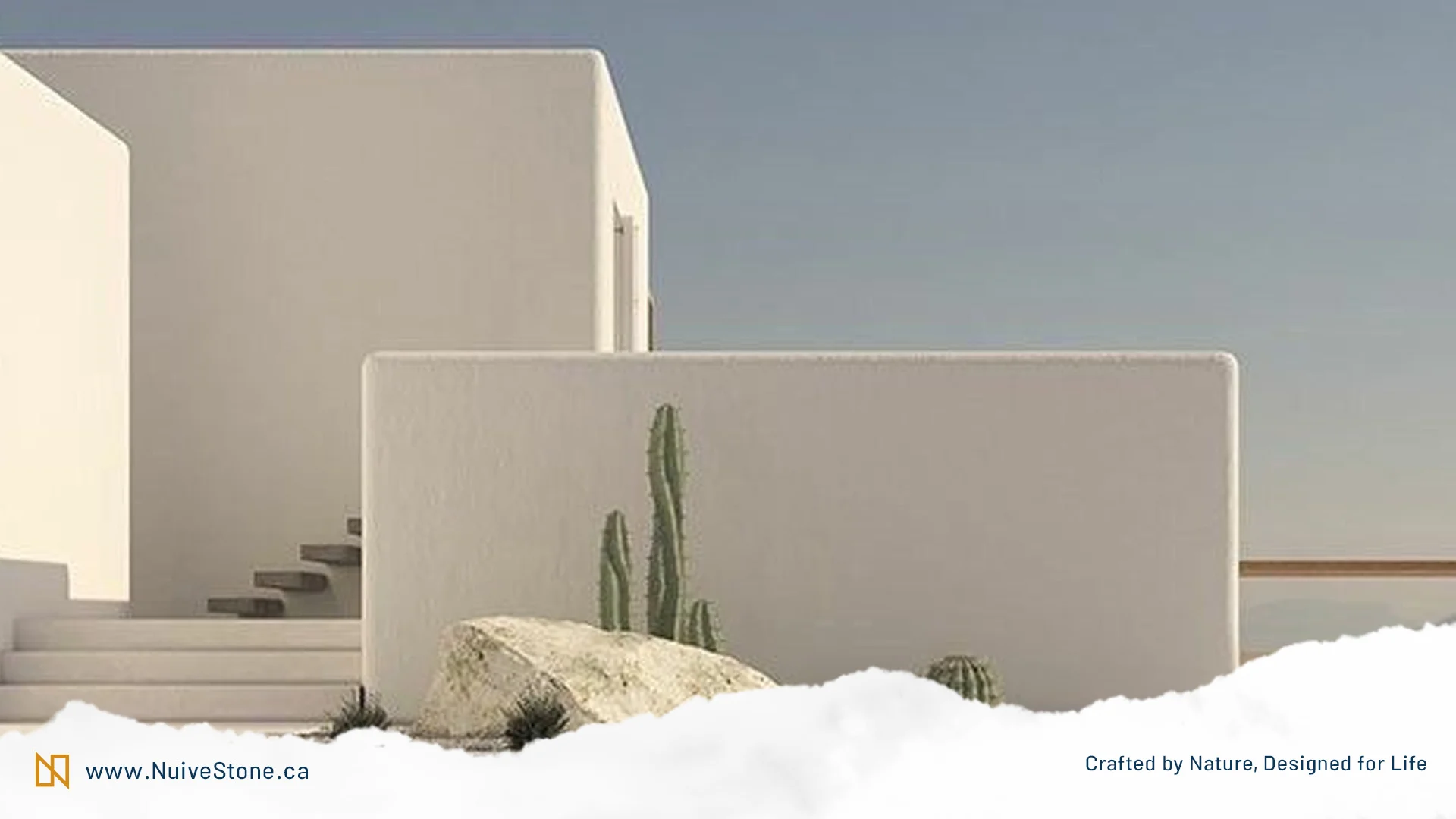
Travertine in Exterior spaces
How to Care for Travertine
Travertine is a durable and timeless material, but like any natural stone, it requires proper care to maintain its beauty and longevity. Regular cleaning, sealing, and prompt repairs are essential to protect it from wear and tear. With the right maintenance routine, you can keep your travertine surfaces looking as stunning as the day they were installed.
Cleaning Tips
Routine cleaning is key to preserving travertine’s natural beauty. Start by sweeping or dust-mopping weekly with a soft broom to remove dirt and debris that could scratch the surface. For deeper cleaning, use a pH-neutral cleaner specifically designed for natural stone, as acidic or abrasive cleaners can damage the surface and cause etching. Be vigilant about spills, especially acidic substances like citrus juice, vinegar, or wine, as they can stain or dull the stone. Wiping spills immediately with a damp, soft cloth will help prevent permanent damage.
Sealing for Protection
Travertine is naturally porous, which makes sealing an essential step in its maintenance. A high-quality sealant creates a protective barrier that helps repel stains, moisture, and dirt. For high-traffic areas, it’s recommended to reseal travertine every 1-2 years, while less-used areas may only require sealing every 3-5 years. To determine if your surface needs resealing, perform a simple water test: place a few drops of water on the stone, and if it absorbs quickly, it’s time to reapply the sealant. Proper sealing not only protects the stone but also enhances its natural appearance.
Repairing Minor Damage
Despite its durability, travertine can develop minor scratches, chips, or cracks over time. Fortunately, these imperfections can often be addressed with travertine repair kits or fillers, which come in a range of colors to match your stone seamlessly. For more extensive damage or surface dullness, professional refinishing may be required to restore the stone’s original finish. Regular inspections can help catch issues early, preventing them from worsening over time.
By incorporating these simple care routines into your maintenance plan, you’ll ensure that your travertine surfaces remain a beautiful and lasting feature in your home or outdoor spaces. Proper care not only preserves the stone’s functionality but also enhances its timeless appeal.
Cost and Value of Travertine
While travertine is considered an investment, its timeless beauty and durability make it a material that adds significant value to your property. From its visual appeal to its long-term performance, travertine offers a return on investment (ROI) that extends far beyond its initial cost. Understanding the factors that influence its price can help you make an informed decision for your project.
Factors That Influence the Cost
The cost of travertine typically ranges between $10 and $30 per square foot, but high-end varieties can exceed $50 per square foot. Several factors contribute to this price variation:
- Source and Quality: Premium travertine sourced from regions like Italy or Turkey often commands a higher price due to its superior quality and exclusivity.
- Finish: The type of finish applied to travertine affects its price. Polished or honed finishes, which require additional processing to achieve their smooth and refined appearance, are usually more expensive than tumbled or brushed finishes.
- Size and Thickness: Larger tiles or thicker slabs not only cost more to produce but may also require specialized installation, which can add to the overall expense.
Long-Term Value
Although the upfront cost of travertine may seem higher compared to other materials, its long lifespan and enduring appeal make it a cost-effective choice in the long run. With proper care and maintenance, travertine can last for decades without losing its charm, reducing the need for frequent replacements or repairs. Its classic aesthetic also means it won’t go out of style, ensuring that your investment retains its value over time.
Enhanced Property Appeal
Travertine’s ability to elevate the look of a home—whether through elegant flooring, luxurious countertops, or stunning outdoor features—makes it a desirable material for potential buyers. Homes with high-quality natural stone finishes often have increased resale value, as buyers are drawn to the combination of beauty and durability. As a result, incorporating travertine into your home design is not only an aesthetic choice but also a smart financial investment.
By balancing its upfront costs with its unmatched longevity and timeless elegance, travertine proves to be a material that delivers exceptional value. Whether you’re enhancing your living space or improving your property’s marketability, travertine is a choice that pays dividends in both form and function.
Pros & Cons of Travertine
Travertine is a beloved material in architecture and design for its unique combination of beauty, versatility, and durability. However, like any natural stone, it has its strengths and weaknesses. Weighing these pros and cons can help you decide whether travertine is the right choice for your project.
Pros of Travertine
One of travertine’s standout features is its durability. This natural stone is robust enough to handle high-traffic areas, making it ideal for flooring, driveways, and patios. Its natural slip-resistant texture, especially in tumbled or brushed finishes, makes it a practical choice for spaces like pool decks and bathrooms. Another major advantage is its eco-friendliness—travertine is a naturally occurring material that requires minimal processing, reducing its environmental impact compared to synthetic options.
Travertine’s versatility is another key benefit. It is available in various finishes, colors, and formats, allowing it to complement a wide range of interior and exterior designs. Additionally, its timeless beauty, characterized by its earthy tones and natural patterns, adds warmth and elegance to any space, ensuring it remains stylish for years to come.
Cons of Travertine
While travertine has many advantages, it does have some drawbacks to consider. Its porosity makes it susceptible to absorbing liquids, which can lead to staining or damage if left unsealed. Regular sealing is essential to protect the stone, particularly in areas exposed to spills or moisture. Similarly, travertine’s sensitivity to acidic substances—such as citrus juice, vinegar, or wine—can result in etching, so care must be taken to clean up spills promptly.
Another limitation is its upfront cost. While travertine offers excellent long-term value, its initial price point, including installation and sealing, can be higher than alternative materials. Finally, its color flexibility may be somewhat restricted compared to engineered stones, as it primarily comes in neutral and earthy tones, which may not suit every design preference.
In summary, travertine is a natural stone that delivers exceptional beauty, durability, and eco-friendly benefits, but it requires proper care and maintenance to mitigate its porosity and sensitivity. By weighing these pros and cons, you can determine whether travertine aligns with your design goals and lifestyle needs.
Conclusion
Travertine stone has proven its worth as a timeless material that effortlessly blends natural beauty with durability. From its rich history in ancient architecture to its modern applications in homes and landscapes, travertine continues to be a versatile and elegant choice for those seeking to enhance their spaces. With its unique textures, warm tones, and ability to adapt to a variety of finishes, it remains a favorite for both indoor and outdoor projects.
While travertine requires proper care, including sealing and routine maintenance, the long-term benefits far outweigh the effort. Its durability, eco-friendliness, and ability to increase property value make it a sound investment for any design or renovation project. Whether you’re looking for rustic charm or polished sophistication, travertine offers endless possibilities to suit your aesthetic and functional needs.
If you’re ready to elevate your space with the timeless elegance of travertine, look no further than Nuivestone. Our team of experts is dedicated to helping you find the perfect stone for your project, offering a wide selection of premium-quality travertine in various finishes and colors. Let us guide you through the process, from selection to installation, ensuring that your vision becomes a reality.
Contact Nuivestone today to explore our collection or get expert advice on incorporating travertine into your next project. Together, we’ll create a space that’s not only stunning but also built to last for generations to come. Visit our website or showroom and discover the beauty of travertine with Nuivestone!

Honed vs. Polished Stone: What Is the Difference?
How to Maintain and Clean Decorative Landscape Rocks?